
AI Audio ROI: Scale Your Marketing with Confidence
Unlock the power of AI in audio marketing! Prove ROI, personalize ads, & scale your campaigns. Explore the future of audio advertising now!

Measuring the Unseen: The Imperative of AI in Modern Audio Marketing
The contemporary marketing landscape is profoundly shaped by an unprecedented surge in digital audio consumption, from podcasts to streaming platforms, creating fertile ground for sophisticated digital advertising strategies. Historically, quantifying the return on investment (ROI) for audio campaigns presented significant challenges, often limited to impression-based metrics rather than granular audio engagement or conversion attribution. This opaque measurement framework has long hindered widespread enterprise adoption, relegating audio to a secondary role despite its pervasive reach. Enter Artificial Intelligence. AI Audio Advertising is now emerging as the critical enabler, transforming the future of audio marketing by bridging this analytical chasm. AI-driven platforms facilitate hyper-audio personalization, dynamic content generation, and robust attribution models, moving beyond traditional commercial jingles to create compelling sonic branding experiences. This technical leap not only proves ROI but also unlocks scalable opportunities, even leveraging user-generated content (UGC) for highly authentic marketing through UGC Audio Ads, fundamentally reshaping how brands connect audibly.
Key Takeaways
- Digital audio consumption is surging, creating new opportunities for sophisticated digital advertising strategies.
- Traditional audio marketing historically struggled with ROI attribution due to opaque, impression-based metrics.
- AI Audio Advertising is critical for the future of audio marketing, enabling precise ROI measurement, hyper-personalization, and scalable authentic marketing opportunities like UGC Audio Ads.
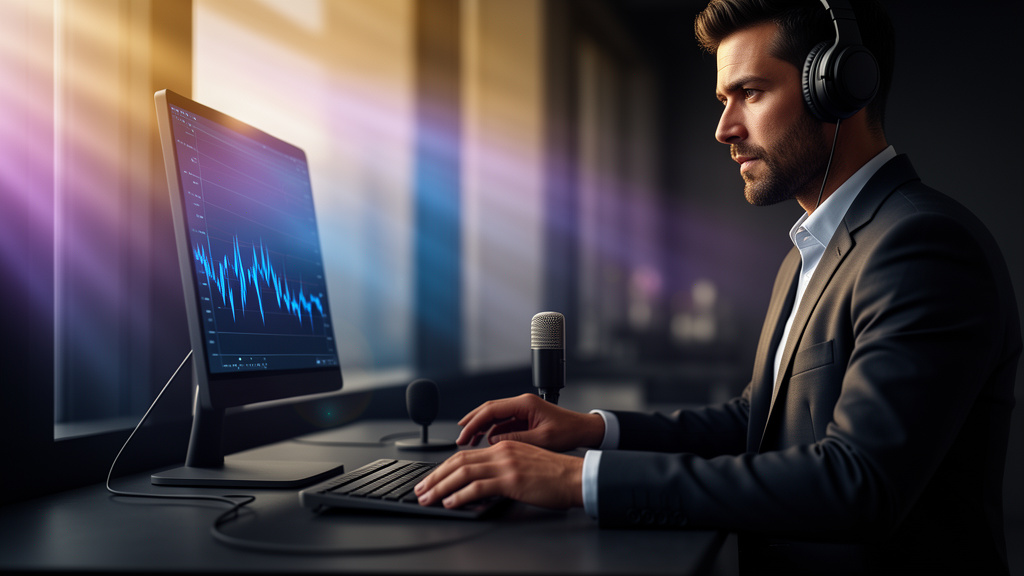
Unlock Audio ROI with AI
- •The sound of marketing's future.
- •Prove value, personalize experiences.
From Broadcast Waves to Personalized Soundscapes: The Digital Transformation of Audio Advertising
The audio landscape has undergone a seismic shift, moving definitively from linear broadcast models to a highly fragmented, on-demand paradigm. Consumers now inhabit personalized soundscapes curated across streaming platforms, a burgeoning podcast ecosystem, and ubiquitous smart speakers. This evolution presents both a significant opportunity and a complex challenge for the Future of Audio Marketing. The days of solely relying on broad demographic targeting for mass-market commercial jingles are rapidly obsolescing.
Unlike the often-interruptive nature of past audio spots, the modern listener demands engaging, non-intrusive, and contextually relevant ad formats. The efficacy of AI Audio Advertising increasingly hinges on its ability to deliver authentic marketing experiences, often leveraging User-Generated Content (UGC) or UGC Audio Ads that resonate deeply within a user's chosen listening context. This necessitates a granular understanding of user behavior and preferences, extending far beyond traditional demographic segmentation.
Consequently, traditional digital advertising measurement models, primarily designed for visual mediums and direct click-through attribution, prove woefully inadequate for this dynamic environment. Metrics like simple impressions or listen-through rates fail to capture the nuanced impact of sonic stimuli or the indirect influence on brand perception and purchase intent. The unique challenge lies in accurately quantifying audio engagement in a multi-device, multi-tasking environment where listeners often consume content passively. Developing robust frameworks for measuring the true ROI of sonic branding and direct response within this ambient consumption model is paramount, signaling a clear imperative for advanced analytical capabilities.
Key Takeaways
- Audio marketing has shifted from linear broadcast to personalized, on-demand soundscapes across streaming, podcasts, and smart speakers.
- Modern consumers demand engaging, non-intrusive, contextually relevant audio ads, moving beyond traditional commercial jingles.
- Traditional digital advertising measurement models are insufficient for evaluating audio engagement and ROI in this new, fragmented landscape.
- Quantifying audio engagement in a multi-device, multi-tasking environment presents a unique measurement challenge for marketers.
Engineering Engagement: How AI Powers Hyper-Personalization and Scalable Audio Content
AI is fundamentally reshaping Digital Advertising within audio, moving from static commercial jingles to dynamic, tailored soundscapes. This transformation is driven by sophisticated AI Audio Advertising technologies, engineering unparalleled Audio Engagement through hyper-personalization and scalable content generation. AI-Driven Content Generation for Dynamic Ad Variants: The evolution of audio ad creation is spearheaded by AI-driven content generation. Advanced neural text-to-speech (TTS) engines, leveraging transformer architectures, produce human-like vocalizations with nuanced inflections. This is extended by voice cloning technology, replicating specific vocal characteristics for brand consistency (e.g., a brand ambassador's voice) or localized delivery with synthetic accents, maintaining sonic branding across diverse campaigns without extensive re-recording. Crucially, dynamic audio assembly engines enable massive scalability. These systems combine pre-recorded musical beds, sound effects, and AI-generated voiceovers with real-time data points. An e-commerce brand, for instance, can generate thousands of unique audio ad variants hourly, each dynamically mentioning a user's recently viewed product, local store availability, or a time-sensitive offer. This is achieved by passing variable data (product ID, location, discount) to an AI framework that selects appropriate audio assets, performs TTS for textual inserts, and mixes them cohesively, delivering hyper-relevant content at unprecedented scale. Advanced Audience Segmentation and Real-Time Behavioral Targeting: The efficacy of AI Audio Advertising hinges on granular audience understanding. AI algorithms analyze vast multi-modal datasets—including listening habits, historical purchase data, geo-location, and browsing behavior—to construct intricate audience micro-segments. This extends far beyond traditional demographics, enabling real-time behavioral targeting. When an ad impression opportunity arises, AI processes millions of data points about the user in milliseconds, determining not only who the listener is but what content they've recently engaged with, and which ad variant is most likely to resonate. This intelligent decision-making ensures unparalleled ad relevance, maximizing ROI. The Future of Audio Marketing is about reaching the right ear, at the right time, with the right message. The Power of User-Generated Content (UGC) Audio Ads: A significant innovation for scalable content and Authentic Marketing is the rise of User-Generated Content (UGC) Audio Ads. AI plays a crucial technical role in operationalizing UGC. Platforms can solicit audio testimonials or creative soundbites from users. AI then moderates this content, applying natural language processing (NLP) for sentiment analysis and keyword detection, alongside audio analysis for quality control (e.g., noise reduction, volume normalization). Following moderation, AI-powered audio engineering tools seamlessly integrate these raw UGC segments into polished ad templates, adding brand-consistent background music, professional voiceovers, or existing commercial jingles. This dramatically reduces production costs and infuses campaigns with authenticity and trust, making UGC a powerful driver of Audio Engagement. Optimizing Ad Placement, Frequency Capping, and Sonic Branding: Beyond content creation and targeting, AI optimizes Digital Advertising delivery. Intelligent algorithms predict optimal ad placement within audio content, considering listener fatigue curves, content context (e.g., news, podcast), and historical performance. This dynamic placement ensures ads are heard when listeners are most receptive. Furthermore, AI implements sophisticated frequency capping, moving beyond static limits to adaptive models that adjust ad exposure based on real-time user engagement, preventing ad oversaturation. Finally, AI ensures rigorous sonic branding consistency. Leveraging predefined brand sound libraries and voice profiles, AI guarantees that every ad variant, regardless of its dynamic components, adheres to the established brand sonic identity, reinforcing recognition across all digital audio channels. This holistic approach defines the cutting edge of the Future of Audio Marketing.
Key Takeaways
- AI powers hyper-personalized and scalable audio content generation via advanced TTS, voice cloning, and dynamic audio assembly engines.
- AI-driven granular audience segmentation and real-time behavioral targeting deliver unparalleled ad relevance and maximize ROI in digital audio advertising.
- The technical integration of User-Generated Content (UGC) audio ads, moderated and polished by AI, offers an authentic and highly scalable solution for enhanced audio engagement.
Beyond Impressions: Advanced Analytics for Measuring AI Audio Marketing ROI
Traditional metrics like impressions fall short in capturing the nuanced impact of AI Audio Advertising. The Future of Audio Marketing hinges on advanced analytics that move beyond surface-level measurements to uncover the true ROI. This section delves into the sophisticated measurement frameworks enabled by AI.
Defining AI-Driven Audio KPIs:
- Listening Completion Rate: Measures the percentage of listeners who complete an audio ad or segment. A high completion rate indicates compelling content and effective targeting. Optimizing for completion rate is critical for Audio Engagement.
- Interactive Engagement Signals: AI allows for interactive audio ads, capturing user responses via voice commands or button presses. Tracking these interactions provides direct insight into user intent and interest.
- Voice Command Conversions: For ads integrated with voice assistants, tracking voice command conversions (e.g., "Add to cart," "Schedule a demo") provides a clear measure of direct response.
Multi-Touch Attribution Modeling:
Integrating audio data into multi-touch attribution models is crucial for understanding its contribution to the overall customer journey. This involves:
- Data Integration: Ingesting audio ad performance data (from platforms like Spotify Ad Studio or Pandora) into your data warehouse (e.g., Snowflake, BigQuery).
- Attribution Logic: Implementing attribution models (e.g., Markov Chain, Shapley Value) that assign fractional credit to audio touchpoints based on their influence on conversions.
- Cross-Channel Analysis: Analyzing the interplay between audio ads and other Digital Advertising channels (search, social, display) to identify synergistic effects. For example, a user who hears an audio ad and subsequently searches for the product demonstrates audio's influence on brand awareness.
Sentiment Analysis and Sonic Branding Impact:
AI enables the analysis of spoken feedback to gauge brand perception and emotional response. Consider these use cases:
- Sentiment Analysis of User-Generated Content (UGC): AI can analyze sentiment in User-Generated Content related to your brand, particularly audio reviews or mentions in podcasts. This provides valuable insights into how your Sonic Branding and Commercial Jingles resonate with your audience.
- Brand Lift Studies with Voice Feedback: Conduct surveys with voice-based responses to measure brand lift and ad recall. AI can analyze the sentiment and content of these responses to provide deeper insights than traditional surveys.
Predictive Analytics for Audio Optimization:
- Campaign Performance Forecasting: Use machine learning models (e.g., time series forecasting, regression models) to predict campaign performance based on historical data and external factors.
- Budget Optimization: Allocate budget across different audio ad segments based on predicted ROI, using techniques like Bayesian optimization or reinforcement learning.
- Targeting Refinement: Identify audience segments that are most responsive to your Audio Personalization efforts using clustering algorithms or classification models. This allows for more effective targeting and higher Audio Engagement. Analyzing performance of UGC Audio Ads can inform what kinds of authentic marketing is working best for specific personas. Effective measurement is key to proving out the value of AI in audio, and justifying further investment.
Key Takeaways
- AI enables advanced KPIs for audio, like listening completion rates and voice command conversions.
- Multi-touch attribution models are crucial for integrating audio into the broader marketing mix.
- Sentiment analysis of spoken feedback provides insights into brand perception and sonic branding impact.
- Predictive analytics optimize audio campaigns by forecasting performance and refining targeting.
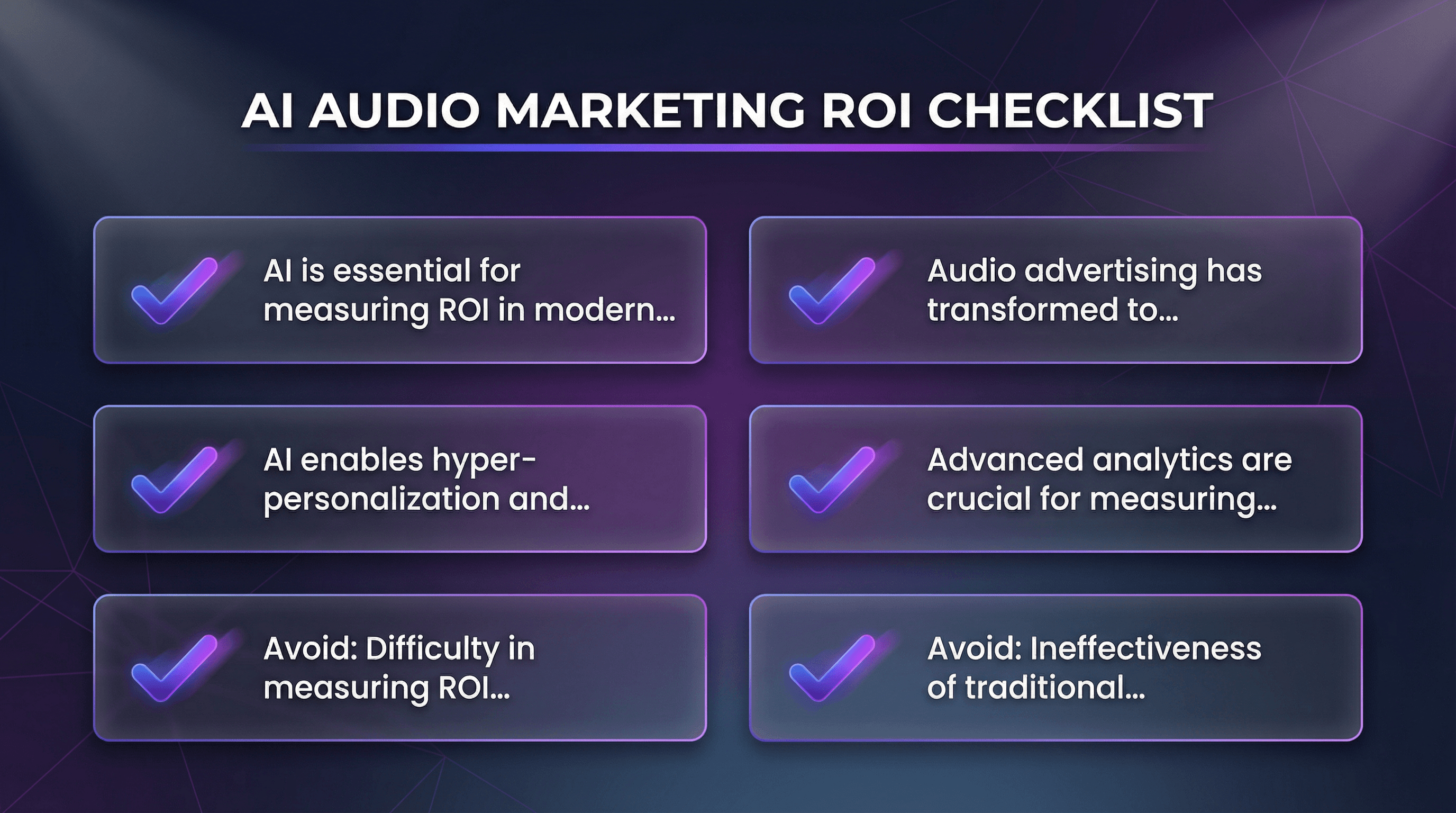
Architecting Growth: Strategies for Scaling AI-Powered Audio Marketing
Scaling AI-powered audio marketing requires a strategic approach to integration, optimization, and brand consistency. Successfully architecting growth involves several key components:
Seamless Integration: AI audio advertising solutions should integrate smoothly into existing MarTech stacks. This means ensuring compatibility with your Customer Relationship Management (CRM), Data Management Platform (DMP), and analytics platforms. For example, integrating your AI audio platform with a DMP allows for enhanced audience segmentation and personalized ad delivery based on user behavior data collected across various channels. APIs are critical here; ensure your audio platform offers robust APIs for data exchange. A typical API call might look like:
import requests

url = "https://api.audioadplatform.com/v1/campaigns"
headers = {
    "Authorization": "Bearer YOUR_API_KEY",
    "Content-Type": "application/json"
}
data = {
    "campaign_name": "AI Audio Campaign",
    "target_audience": "Tech Enthusiasts",
    "budget": 1000
}

response = requests.post(url, headers=headers, json=data)
print(response.json())
Continuous Optimization: Rigorous A/B testing and multivariate analysis are essential. Experiment with different ad creatives, targeting parameters, and delivery schedules. Continuously monitor key performance indicators (KPIs) like click-through rates (CTR), conversion rates, and audio engagement metrics (e.g., listen-through rate) to refine your campaigns. Iterate frequently and leverage machine learning algorithms to identify optimal strategies automatically.
Sonic Branding: Develop a cohesive sonic branding strategy. This includes crafting memorable commercial jingles, using consistent sound effects, and establishing a distinct audio identity across all touchpoints. AI can be used to generate variations of your core sonic elements, ensuring freshness while maintaining brand recognition. This helps cultivate authentic marketing and deeper Audio Engagement.
Future Trends: The future of audio marketing is ripe with opportunity. Conversational AI will enable interactive audio ads and personalized user experiences. Spatial audio advertising, offering immersive 3D soundscapes, will become more prevalent. The metaverse will also significantly impact audio engagement, with virtual environments creating new avenues for audio advertising and interactive audio experiences with User-Generated Content. Exploring the power of UGC Audio Ads will be crucial for authentic engagement as we move forward.
Key Takeaways
- Integrate AI audio solutions seamlessly into existing MarTech stacks via APIs.
- Employ A/B testing and multivariate analysis for continuous campaign optimization.
- Develop a consistent sonic branding strategy for brand recognition.
- Explore emerging trends like conversational AI, spatial audio, and metaverse opportunities.
Create Your Own Audio Ad
Turn this inspiration into reality. Generate a professional jingle or UGC ad in minutes.
Ready to Get Started?
Join thousands of businesses creating professional audio ads with AI.

Michael Shaw
Founder & CEO
Founder of SonicBrand AI, passionate about revolutionizing audio marketing through AI-powered solutions.
Ready to Create AI-Powered Audio Ads?
Generate professional jingles and audio UGC ads in minutes. No audio experience required.